
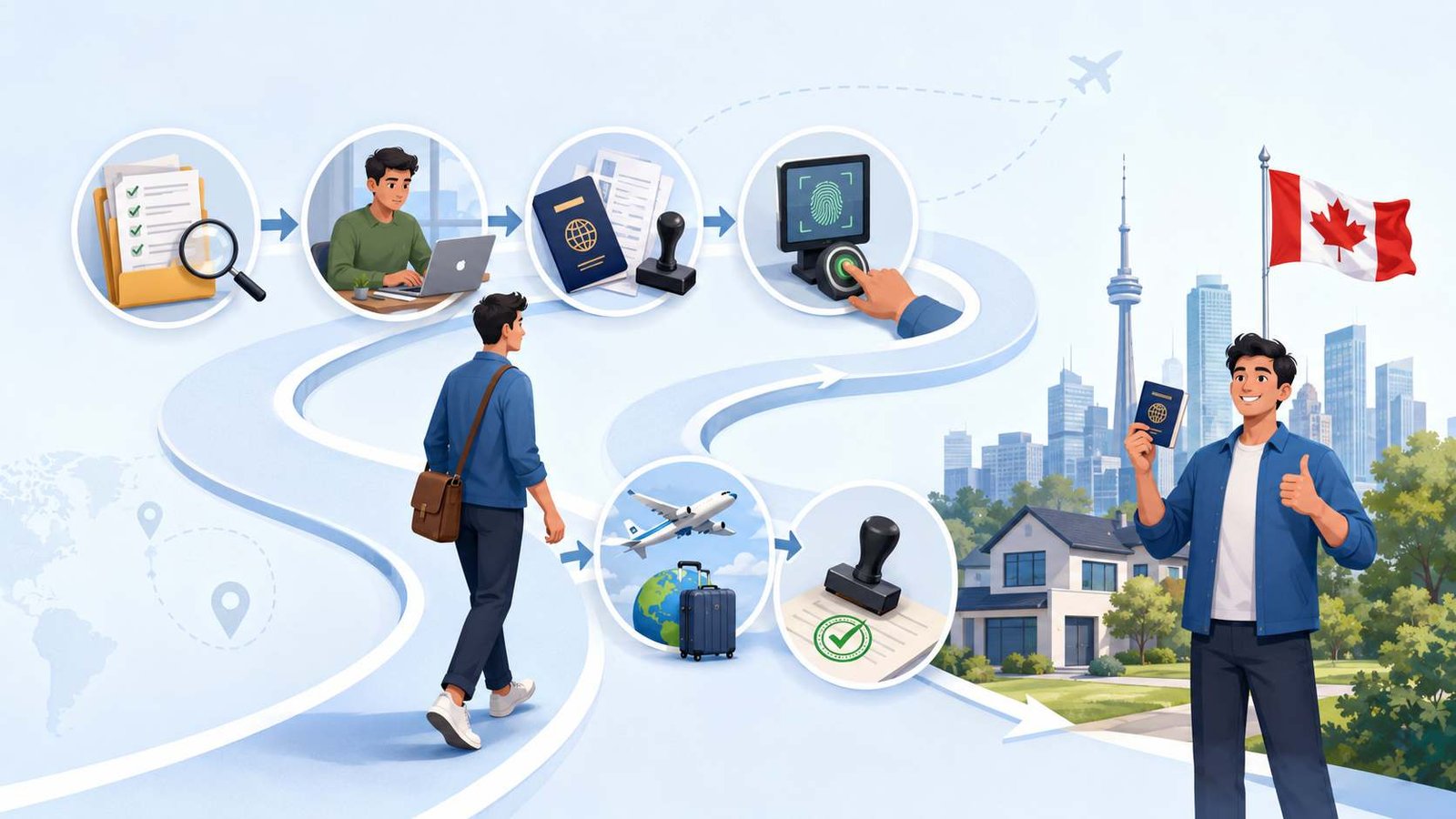
How to Get a PR Visa in 2026: Complete Step-by-Step Guide
Planning to get Permanent Residency (PR) in 2026 but unsure where to start? This guide breaks the PR journey into clear, easy-to-follow stages that apply broadly to popular destinations such as Canada and Australia, as well as other skilled-migration countries.
What Is a PR Visa?
A Permanent Residency (PR) visa allows you to live, work, and study in a country long term, usually with access to public healthcare, social benefits, and often a pathway to citizenship.
Most PR systems for skilled workers use a points-based system that considers factors such as:
- Age
- Education
- Work experience
- Language skills
- Job offers or provincial/state nominations
Step-by-Step PR Process in 2026
Below is a general framework that most skilled PR programs follow. Always verify the latest rules on the official immigration website of your target country.
Step 1: Check Eligibility and Points
- Review the basic eligibility criteria, including age limits, minimum education, work experience, and language requirements.
- Use a points calculator to determine whether you meet the minimum score threshold.
- Keep in mind that competitive draws often require scores higher than the minimum eligibility score.
Step 2: Choose the Right PR Pathway
Common PR pathways include:
- Federal skilled worker or skilled migration programs
- Provincial or state nomination programs
- Family sponsorship programs
- Business or investor pathways
- Student-to-PR routes for international graduates already living in the country
Choose the pathway that best matches your profile, occupation, location preference, or study background.
Step 3: Get Skills Assessed and Education Evaluated
- Some countries require a formal skills assessment from an approved authority related to your occupation.
- Many programs also require an Educational Credential Assessment (ECA) to verify that your foreign education matches local standards.
This process verifies your qualifications and is often required before you can create your online immigration profile.
Step 4: Take a Language Test
- Take an approved English language test such as:
- IELTS General
- CELPIP
- PTE
- In some countries, French-language tests may also award additional points.
- Higher language scores significantly improve your overall ranking.
Step 5: Create an Online PR Profile
Create your online profile through the official immigration portal and include details such as:
- Education
- Work history
- Language test scores
- Family information
Your profile will receive a score and be placed into a candidate pool. Immigration authorities regularly conduct draws and invite top-ranking candidates to apply.
Step 6: Improve Your Score (If Needed)
If your score is not competitive, you can improve it by:
- Retaking language tests for better scores
- Gaining more skilled work experience
- Applying for provincial/state nominations
- Securing employer sponsorship
- Adding your spouse’s qualifications, where applicable
Even small score improvements can significantly increase your chances of receiving an invitation.
Step 7: Receive an Invitation to Apply (ITA)
Once your score meets the required cutoff, you may receive an Invitation to Apply (ITA) for PR.
You typically have a limited period—often around 60 days—to submit a complete application along with all supporting documents and required fees.
Step 8: Prepare and Upload Documents
Typical documents include:
- Valid passport
- Recent photographs
- Language test results
- ECA or skills assessment reports
- Work experience letters detailing duties, salary, and duration
- Proof of funds, such as bank statements
- Medical examination results
- Police clearance certificates
Ensure all documents are accurate, consistent, and up to date to avoid delays or refusals.
Step 9: Pay Fees and Submit the Application
- Pay all applicable government fees, including:
- Processing fees
- Permanent residence fees
- After submission, you will receive an acknowledgement and can track your application online.
Step 10: Wait for Processing and Decision
- Processing times vary by country and program.
- Applications may take several months to over a year.
- Immigration officers may request additional documents or clarifications during processing.
Respond promptly to avoid unnecessary delays.
Step 11: Complete Landing and Activate PR
- Applicants outside the country must travel before their visa expires to activate their PR status.
- Applicants already inside the country may complete the PR confirmation process online or through an in-country procedure.
Once completed, your permanent residency status becomes officially active.
Sample PR Requirements Overview Table (2026)
| Factor | Typical Requirement / Note |
|---|---|
| Minimum points | Usually around 65–67 minimum; actual cutoffs are often higher |
| Work experience | Minimum 1 year of skilled work experience |
| Language proficiency | Mid-level scores required; higher scores provide extra points |
| Education | Diploma or degree; foreign credentials may require evaluation |
| Proof of funds | Required in many programs unless exempt |
| Medical & police checks | Mandatory for most adult applicants |
| Processing time | Commonly 6–12 months depending on the program |
Frequently Asked Questions (FAQ)
Q1: Can I get PR in 2026 without a job offer?
Yes. Many skilled PR programs do not require a job offer. However, having one usually increases your score and improves your chances of selection.
Q2: What is considered a good PR points score?
A strong score is one that remains above recent draw cutoffs. Since cutoffs change regularly, higher scores provide better chances of receiving an ITA.
Q3: Do I need a migration or visa consultant?
No. Many applicants successfully apply on their own by carefully following the official government instructions. Professional consultants are optional and are generally used for complex cases or strategic guidance.
Q4: How long does PR approval take in 2026?
Processing times vary by country and program, but most skilled PR applications take several months. Missing documents or additional verification checks can cause delays.
Q5: Can international students convert to PR after studying?
Yes. In many countries, international students can transition from a post-study work visa to a PR after gaining local skilled work experience.